Bedding · Styling and care
How to Layer Decorative Pillows with Texture and Restraint
A considered arrangement of pillows can make a bed or sofa feel welcoming without turning it into a crowded display. The key is not to add more, but to notice how shape, scale, fabric, and color work together—and to leave enough room for the materials to speak.
In a quiet bedroom, texture often does the work of pattern. The faint slub of linen, the raised rows of a knit, or the crisp edge of a woven cover can catch the light differently as the day moves on. A few decorative pillows bring those small variations close to eye level. They can soften a carefully made bed, add a note of contrast to a plain sofa, or connect the colors of a room without demanding attention.
Yet layering is easy to overdo. Too many pillows can crowd a mattress, obscure a beautiful headboard, or create a nightly obstacle course. A better approach begins with the pillows that serve a purpose, then adds a small number of accents chosen for how they feel and relate to what is already there. The result should look composed, but still seem ready to use.
This guide explores a practical way to build that balance: start with comfort, choose a restrained palette, vary texture thoughtfully, and pay attention to size and care. The same principles work in a bedroom or living room, whether the starting point is crisp cotton bedding, a relaxed linen duvet, or a sofa that needs just one inviting detail.
Begin with the pillows that earn their place
Before choosing decorative pillow covers, take stock of the pillows you actually use. On a bed, that usually means the pillows you sleep on and any supportive pillows that help you read or rest. On a sofa, it may mean one cushion that makes a deep seat more comfortable. These functional pieces form the foundation; decorative accents are the finishing layer, not a substitute for comfort.
Set the everyday pillows in place first. Notice how much surface remains, where the bed’s headboard or sofa arms create natural boundaries, and whether there is enough room to sit or lie down. Then add one accent at a time. After each addition, pause and look at the whole arrangement from across the room. If the furniture still feels usable and the eye can settle somewhere, the balance is probably close.
This simple sequence can prevent a common styling mistake: selecting a set of covers before considering the existing bedding. A decorative pillow should relate to the room’s established materials and colors. It does not need to match every sheet or blanket. Often, a small difference in weave or tone is more appealing than a perfectly coordinated set.
- Keep the pillows you rely on for sleep or support accessible.
- Add accents gradually rather than arranging the entire collection at once.
- Check that the bed or seating remains comfortable to use.
- Remove any pillow that feels redundant, awkward, or difficult to maintain.
Use texture as a quiet source of contrast
Texture gives a neutral room dimension. A smooth sheet and a relaxed linen cover may share a pale color, yet their surfaces respond to touch and light in different ways. Linen’s characteristic irregularities create a gently varied plane; a knit cover introduces more visible relief through its stitches. When these fabrics sit beside smoother bedding, the difference can be enough to make a bed feel layered without adding a bold print or a new color.
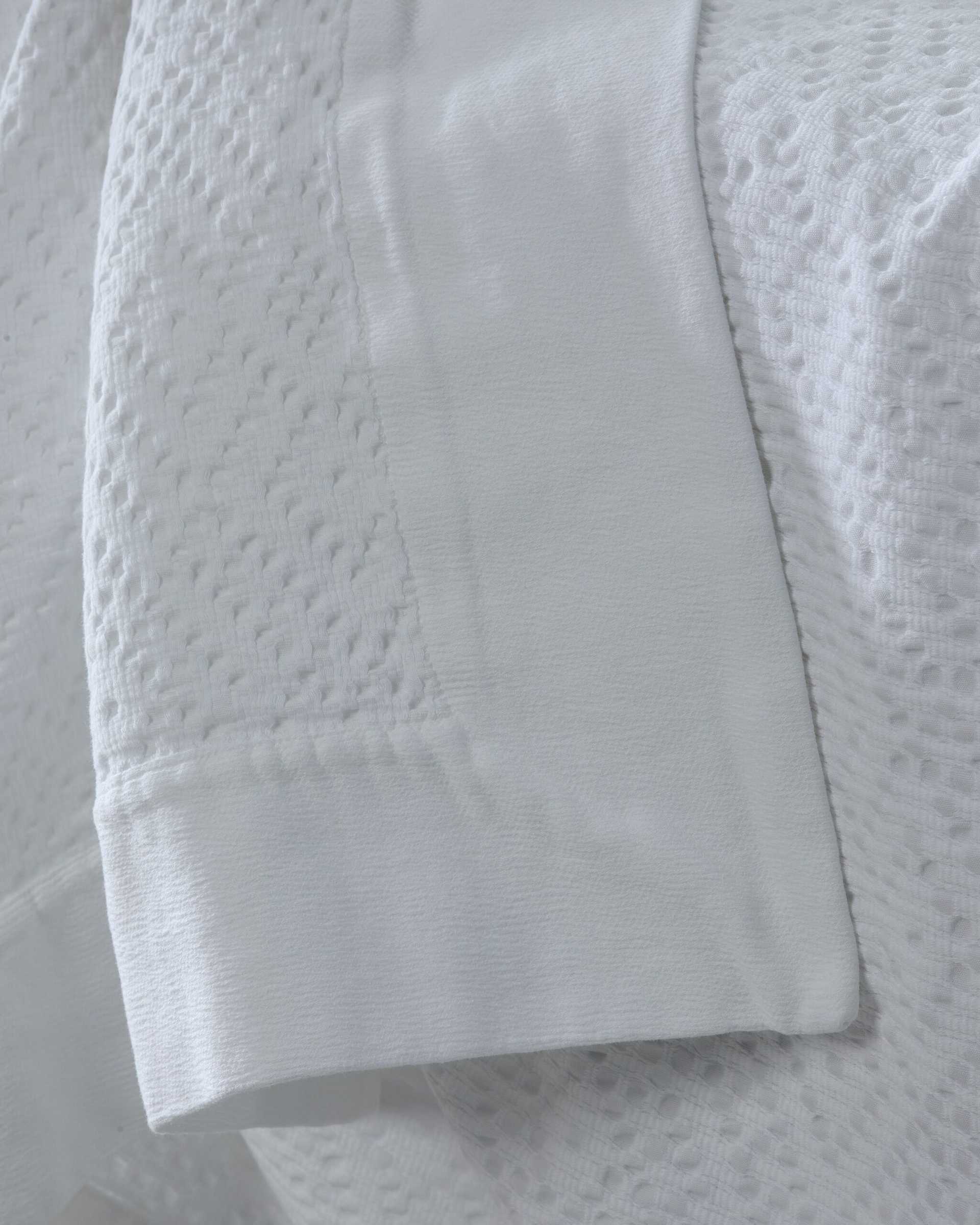
For an understated arrangement, choose one dominant texture and one supporting texture. If the bed already has a quilted blanket or a pronounced waffle weave, a simple linen pillow cover may provide a calmer counterpoint. If the bedding is very smooth, a knitted accent can offer a more noticeable surface detail. The aim is not to assemble every texture available, but to create a small conversation between materials.
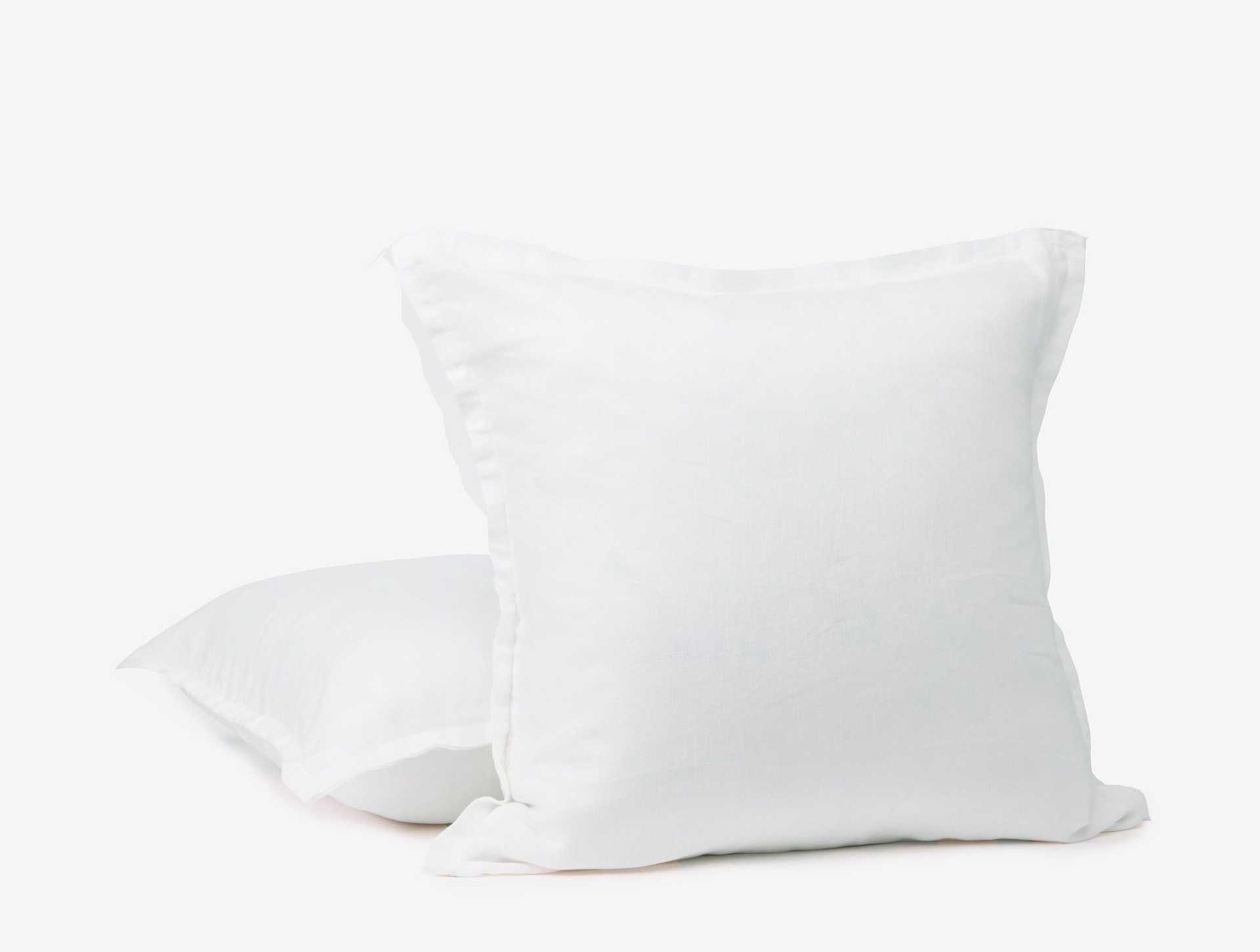
Organic linen is particularly useful when a room needs softness without fuss. A washed finish often gives the fabric a relaxed, slightly rippled hand that looks at home with both tailored and casual bedding. The Organic Relaxed Linen Decorative Pillow Cover, for example, is made from 100% organic linen, with flax grown in France and fabric woven in Portugal. Its washed surface is described as becoming more supple with each wash, making it a natural option for a bed or sofa where a relaxed finish is welcome.
A knit cover makes a different impression. Its stitches create a more defined pattern of light and shadow, so it can act as the arrangement’s focal texture. When using one, keep neighboring pieces relatively simple. A textured accent needs a little visual breathing room, just as a patterned object needs space around it to remain legible.
Think of texture in terms of distance as well as touch. A surface with fine irregularity may appear calm from across the room and reveal its character only up close. Chunkier stitches or a pronounced woven stripe are visible sooner. Pairing one subtle and one more obvious texture often creates depth while keeping the overall effect composed.
Build a palette from what is already in the room
Color is easiest to manage when it begins with existing elements: a duvet, a headboard, a rug, or the upholstery of a sofa. Select a few tones that are already present and let the pillow covers echo them. The relationship can be close rather than exact. A warm white may sit comfortably beside a natural flax shade; a muted stripe can pick up a darker line in a blanket or rug.
Restrained does not have to mean colorless. A room with mostly pale bedding might benefit from one deeper accent, while a sofa in a saturated color may need a softer neutral nearby. The useful question is not whether every pillow matches, but whether the tones seem to belong to the same setting. Consider the temperature of the colors, too: a mix of warm creams and cool grays can feel less settled than a palette with a shared undertone.
Patterns can be included, but they need not compete for attention. If a bed has a striped duvet or a printed quilt, choose a mostly solid pillow cover that picks up one color in the pattern. If the bedding is plain, a narrow stripe can introduce rhythm. A linen cover with a subtle, irregular surface may provide enough variation without adding a second motif.
One practical editing method is to lay the candidate covers together on the bed before inserting them. Look for a clear relationship: perhaps two tones repeat, or a single patterned cover bridges the main bedding and an accent blanket. If every pillow seems to introduce a separate color or design, set some aside. Cohesion often comes from repetition, not from making every piece identical.
Let scale and shape guide the arrangement
Proportion has a quiet influence on how an arrangement feels. A cover that is too small for its insert may strain at the seams; one that is too large can look slack. Before arranging pillows, check the cover’s dimensions and compare them with the insert. Decorative covers are not always sold with inserts, so confirm what is included rather than assuming the complete pillow is part of the purchase.
Square covers are versatile because they can sit in a row or form a compact group. A smaller lumbar shape can break up a run of squares and create a natural center point. On a sofa, a pair of larger cushions at the ends with one smaller accent between them often feels balanced. On a bed, the arrangement may be more symmetrical, but symmetry is a choice, not a rule. A loose grouping can look equally considered when its colors and textures are related.
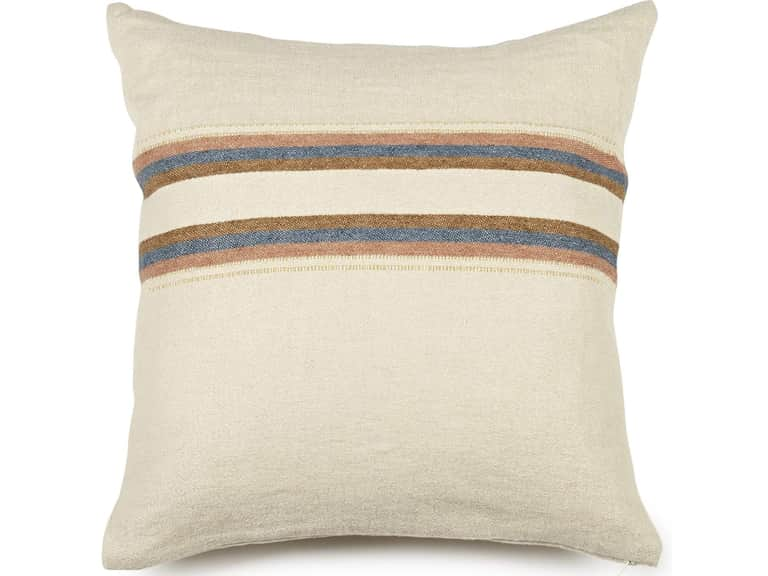
A 20-by-20-inch linen cover, such as The Belgian Pillow cover in Harlan stripe, offers a defined square scale. Its washed linen and understated stripe can add both texture and pattern, while the listed dimensions help with planning. The insert is sold separately, so it is important to account for that when deciding how the cover will fit into an arrangement.
When choosing an insert, check the cover’s guidance and consider how full you want the pillow to look. A plump insert creates a more structured silhouette; a softer fill gives the pillow a relaxed profile. Avoid forcing an insert into a cover in a way that strains the zipper or seams. The best fit supports the shape without making the pillow stiff or difficult to handle.
Scale also depends on the furniture. A broad bed can carry several accents without appearing crowded, while a narrow daybed may need only one. On a compact sofa, large decorative pillows can consume useful seating space. Try the arrangement from the perspective of someone who will actually sit or sleep there, not only from the doorway.
Arrange with a light hand
There is no required number of decorative pillows. A useful starting point is one or two accents, followed by an honest assessment. In a larger bedroom, a few more may make sense if the bed remains accessible and the composition does not hide the bedding. On a sofa, a small group can bring comfort and color; a line of cushions that fills every seat may have the opposite effect.
For a calm bed, place sleeping pillows where they are easiest to use, then add decorative covers in front. A pair of related squares can create order; a single contrasting accent can loosen the arrangement. For a more informal look, vary the heights slightly and avoid making every edge perfectly aligned. The distinction is subtle: a composed arrangement has structure, but it need not look rigid.
On a sofa, let the furniture’s shape do some of the organizing. A pillow at each end frames the seat. A third, smaller accent can sit off-center if the room already has balanced elements elsewhere. If the sofa is patterned, favor simpler covers. If it is plain, texture can supply interest without turning the cushions into a patchwork of competing designs.
Stand back and look at the empty spaces as much as the pillows. Gaps allow each shape to register and make the furniture look usable. If the arrangement feels busy, remove one item before adding another. Editing is often the final step that makes a collection feel intentional.
Choose covers with everyday care in mind
Decorative pillows still live in the real world. They are touched, moved, and sometimes exposed to crumbs, dust, or the occasional spill. Before settling on a fabric, check its care instructions and consider how easily the cover can be removed. A zip closure can make a cover easier to take off, while a washable fabric may suit a busy household better than a piece that requires special handling.
Care labels matter because fibers respond differently to water, heat, agitation, and drying. A gentle cold wash is common guidance for many linen covers, but always follow the instructions for the particular item. Wash similar colors together, avoid overloading the machine, and remove covers promptly when drying is complete. These small habits help limit unnecessary friction and creasing.
For the Organic Relaxed Linen Decorative Pillow Cover, the listed instructions call for a cold, gentle cycle with like colors and low tumble drying; it may be warm-ironed if desired. Other linen covers may have different instructions. A washed artisanal fabric, for instance, may call for separate washing and a delicate drying cycle. Treat the care information attached to the item as the authority rather than assuming every linen behaves identically.
Consider maintenance before choosing a pale or highly textured cover. Light shades can look serene, but they may show marks more readily. Raised or open textures can collect lint. Neither is a reason to avoid a fabric; they are simply practical details to weigh against the way a room is used. In a home with pets or frequent guests, washable covers that are easy to remove may be the more comfortable choice.
Care also shapes how a textile changes over time. Linen may soften with repeated washing, while some knit surfaces need gentler handling to preserve their texture. A pillow cover that grows more familiar with use can become part of the room’s character. The goal is not to keep every fold pristine, but to maintain the fabric thoughtfully and allow it to age in a way that suits the home.
A simple process for a finished look
When a bed or sofa needs refreshing, use this sequence as a practical guide rather than a strict formula:
- Clear the surface. Remove decorative pillows and identify the bedding or upholstery that will remain.
- Restore the essentials. Put the pillows used for sleep or support back in their usual places.
- Choose a palette. Select two or three tones that relate to the existing textiles, rather than introducing a new color for every cover.
- Pick a texture contrast. Pair a quieter surface with one more distinctive weave, knit, or stripe.
- Check dimensions. Match covers and inserts sensibly, and note whether an insert is included.
- Add one accent at a time. Pause after each addition to see whether it contributes something useful.
- Test the arrangement in use. Sit down, lie back, or make the bed. Remove anything that interferes.
This process keeps decisions grounded in comfort. It also makes seasonal changes easier. A room does not need an entirely new set of pillows to feel different; changing one cover, or shifting the balance between smooth and textured fabrics, can alter the mood without creating clutter.
Common styling questions
How many decorative pillows are enough?
There is no universal number. Begin with one or two accents and increase only if the furniture still feels comfortable and visually calm. The right arrangement depends on the size of the bed or sofa, the pillows used for support, and how much space people need to move.
Can different linen covers be mixed?
Yes. Differences in weave, finish, or pattern can add character, especially when the colors share a relationship. Keep the number of strong patterns limited, and check care instructions for each cover before washing them together.
Should decorative pillow covers match the duvet?
They do not need to match exactly. A related shade, a complementary texture, or a detail that repeats a color elsewhere in the room is often enough. A close but not identical relationship can make the bed feel collected rather than packaged.
What should I check before choosing a cover?
Review the material, dimensions, closure, care directions, and what is included. Some covers are sold without an insert. Confirming these details helps you select the right size and understand the upkeep before arranging the pillow at home.
Make room for the materials
The most inviting arrangements are rarely the ones with the most pieces. They are the ones where each cover has a reason to be there: a useful shape, a pleasing surface, a color that connects to its surroundings. Linen can contribute a relaxed, naturally varied finish; knit fabric can bring a more pronounced pattern of stitches; a narrow stripe can add direction. Together, these details create interest without overwhelming a room.
Start with comfort, respect the scale of the furniture, and treat restraint as an active design choice. A pillow left off the bed is not a missed opportunity. It may be what allows the remaining textures to stand out. When the room feels easy to use and the fabrics reward a closer look, the layering has found its balance.