Bedding Care Guide
Choosing a Coyuchi Comforter: Fill, Warmth, and Care
A comforter is more than a layer against the cold. Its fill, construction, dimensions, and cleaning requirements shape the small climate you create in bed—and the routine needed to keep that layer comfortable. When comparing Coyuchi comforters, begin with the room and the sleeper, then look closely at the label. Warmth is personal, but a few practical details can make the choice clearer.
Start with the climate of your bedroom
Bedrooms have their own weather. An upper-floor room may hold heat long after sunset; a shaded room in an older home may feel cool even when the rest of the house is warm. Heating, air conditioning, window exposure, mattress materials, and the number of people sharing a bed all affect how much insulation feels comfortable. Before choosing a comforter, consider the conditions you actually sleep in rather than relying only on the season printed on a calendar.
Think, too, about your own sleep temperature. Some people wake warm and push the covers aside; others prefer a substantial layer even in a heated room. If you share a bed, two sleepers may experience the same bedding differently. A comforter that feels just right to one person can feel heavy or insufficient to another. Your usual habits are useful evidence: notice whether you kick off the covers, add a blanket, or change the room temperature during the night.
Seasonal bedding can be managed in several ways. One household might use a lighter comforter year-round, adjusting pajamas and room temperature as needed. Another might keep a light layer for warmer months and a more insulating one for winter. A duvet system can also make seasonal changes easier: keep a suitable insert, then use a breathable cover that can be laundered more routinely. The best arrangement is not necessarily the one with the most pieces; it is the one that matches your climate and habits without making care complicated.
Understand fill before comparing warmth
Fill is the material inside a comforter, and it plays a major role in how the bedding feels. Down, down alternatives, wool, and other natural or synthetic materials have different characteristics. They can vary in loft, weight, airflow, moisture response, and care needs. A product name alone will not tell you everything: check the materials list and the maker’s description of the intended warmth level.
Down is valued for its loft and insulating ability relative to its weight. That can create a puffy, enveloping feel, though the warmth depends on the amount and quality of fill, the construction, and the product’s design. A down-alternative fill may appeal to people who prefer to avoid animal-derived fill or want a different maintenance profile. The phrase “alternative” is broad, however, and does not specify one fiber or one level of warmth. Look for the exact fill composition and follow its care directions.
Wool and other natural fills can offer a distinct balance of insulation and moisture management, but their performance and washability depend on the construction. Some comforters can be machine washed; others require professional cleaning or more specialized handling. Don’t assume that a natural fill is automatically easy to wash, or that a synthetic fill is automatically suitable for high heat. The care label is the authority for the particular item.
Fill also affects the comforter’s weight and drape. A lofty comforter may feel substantial without being especially heavy, while a denser construction can rest more firmly over the body. There is no universal measure of “cozy.” If you can examine a comforter in person, notice whether you like the way it settles around the shoulders and feet. If shopping online, look for clear descriptions of fill, warmth, construction, and dimensions, and compare those details rather than relying on photographs alone.
Choose warmth for the sleeper, not the label
Warmth ratings and seasonal labels are useful starting points, not guarantees. A lightweight or summer comforter generally offers less insulation than a winter-weight option, but the words used to describe warmth are not always standardized across makers. A “year-round” comforter may suit a temperate bedroom and a sleeper who runs neither especially hot nor cold. It may not work as well in a humid, warm room or a drafty house in midwinter.
Consider the full sleep system. Mattress protectors, sheets, pajamas, blankets, and the comforter all contribute to warmth. Linen and cotton sheets can feel different against the skin and respond differently to heat and moisture, while a dense blanket adds insulation even if the comforter itself is light. If your bed already includes several layers, a very warm comforter may be more than you need.
It can help to think in terms of adjustability. A lighter comforter paired with an easily added blanket gives sleepers more control from night to night. A single warmer comforter may feel simpler, but can be less flexible when temperatures shift. In a shared bed, separate blankets or layers on each side can sometimes accommodate different preferences without changing the entire room.
When the product information does not explain a warmth rating, review the fill material, weight if provided, construction, and intended season together. If those details remain unclear, consult the manufacturer’s current specifications before buying. Avoid inferring warmth from a comforter’s color, loft in a photograph, or the word “organic”; those details do not, by themselves, describe insulation.
Check dimensions and how the bed is made
A comforter’s dimensions determine how it covers the mattress and how much fabric hangs at the sides. A standard size name is not always enough to predict the final look: mattresses vary in depth, and bed frames, toppers, and layering preferences change the amount of coverage people want. Compare the comforter’s actual measurements with the mattress dimensions, including its depth, before settling on a size.
For a neatly tucked appearance, you may prefer less overhang. For a fuller drape, you may want a wider comforter, especially on a tall mattress or a bed shared by two people. If the comforter is intended for a duvet cover, check both pieces’ measurements. An insert that is much smaller than its cover may bunch or leave empty corners; one that is too large can strain seams and closures. Follow the maker’s sizing recommendations where available.
Construction details matter as well. Stitching or internal compartments help distribute fill and limit its movement, but the exact design varies. Examine the product description for information about baffles, sewn-through sections, edge finishing, and closures if these are relevant to your preferences. A stable distribution of fill can help a comforter retain a more even feel, while regular shaking and airing may be part of everyday upkeep.
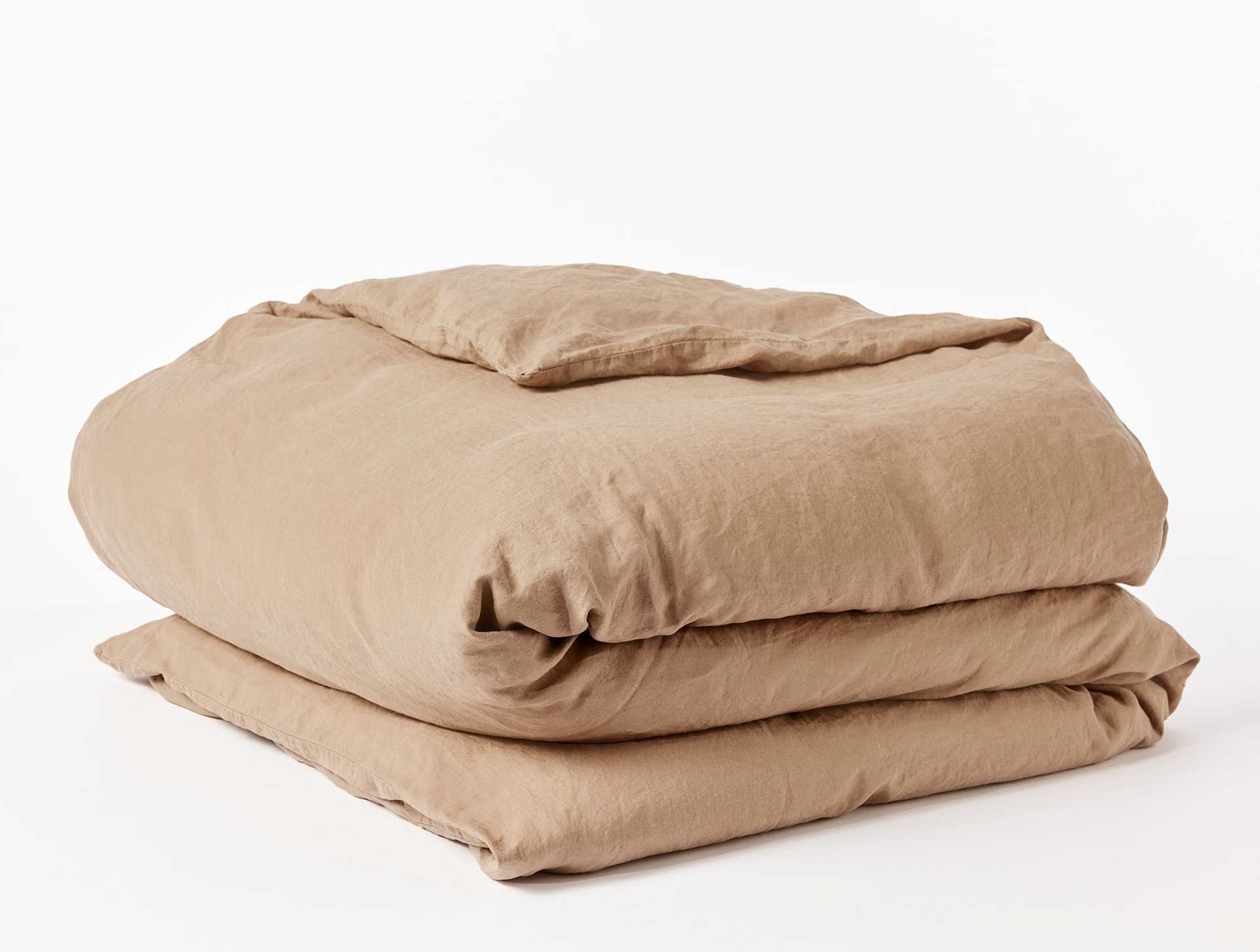
Think about how you make the bed. A comforter used with a duvet cover can be easier to refresh between washes because the cover is the layer in direct contact with the sleeper. That cover must still fit the insert and be manageable to launder. For a linen option, the Organic Relaxed Linen Duvet Cover is made from GOTS-certified organic French linen and has an interior flap, coconut shell buttons, and inside ties. It is a cover—not a comforter or filled insert—so check dimensions and compatibility with your chosen insert before pairing them.
Treat care instructions as part of the decision
A comforter may feel ideal in the showroom and still be a poor fit for a household routine if its cleaning requirements are difficult to manage. Before choosing, find out whether it can be machine washed, whether a large-capacity washer is recommended, whether it must be professionally cleaned, and how it should be dried. A comforter needs room to move in a washer; crowding can prevent thorough rinsing and put stress on seams.
Care directions differ by fill, shell fabric, construction, and finishing. Do not assume that every comforter can be washed in the same way, or transfer instructions from a duvet cover to the insert inside it. Read the label attached to the actual item and keep any care paperwork. If the instructions call for professional cleaning, factor that into the long-term routine. If home laundering is permitted, note the recommended water temperature, cycle, detergent, and drying method.
When machine washing is allowed, prepare the comforter carefully. Close any fastenings, inspect seams for damage, and follow the product label about detergent and cycle settings. Use an appropriately sized machine so the item can move freely. A gentle cycle and mild detergent are commonly suitable for delicate bedding, but the manufacturer’s specific instructions take precedence. Avoid bleach or fabric softener unless the care guidance explicitly allows them; unnecessary treatments can affect fibers or finishes.
Drying deserves equal attention. A comforter that remains damp inside can develop an unpleasant odor or retain moisture, so follow the label and ensure it is completely dry before putting it back on the bed or into storage. If tumble drying is permitted, use the prescribed temperature and check the item periodically. Some care instructions recommend low heat or a particular drying method. Never substitute high heat simply to speed up the process.
Between washes, small habits help keep bedding fresh. Air the bed before making it, shake the comforter gently to redistribute its loft, and deal promptly with spills according to the maker’s guidance. A duvet cover can reduce direct contact with body oils and everyday dust, though it does not eliminate the need to care for the insert. Wash covers and sheets on a schedule that suits use, household needs, and their own care labels.
Build a routine around the whole bed
Bedding works as a system. Sheets touch the skin, the duvet cover protects an insert, and blankets or throws add adjustable warmth. A good arrangement is one you can maintain: covers that fit, layers that suit the room, and cleaning tasks that do not become a seasonal ordeal. If you choose linen sheets or a linen duvet cover, expect the fabric’s texture and handling to differ from smoother cotton or synthetic textiles. Follow the care instructions for each item rather than treating all bedding as a single load.
For example, some linen bedding is designed for cold, gentle machine washing and low-temperature tumble drying, while other linen products specify different limits. The product linked above recommends a cold, gentle wash with like colors and low tumble drying, with instructions to remove it promptly; a warm iron is optional. Those are directions for that duvet cover specifically, not a universal rule for every linen comforter or insert.
Storage matters when a comforter is not in use. Clean and dry it fully before putting it away, then store it in a dry, well-ventilated place. Avoid compressing delicate bedding for long periods unless its manufacturer provides different advice. If you rotate between seasonal layers, a simple label or inventory note can help distinguish the items and remind you of their care requirements.
A practical checklist before you decide
As you compare Coyuchi comforters, use the following questions to bring preference and practicality together:
- What temperature does your bedroom usually reach overnight, and does it change significantly by season?
- Do you tend to sleep warm, sleep cool, or change during the night?
- What is the exact fill material, and how does the maker describe its intended warmth?
- Does the comforter’s weight and construction sound comfortable for the way you like bedding to drape?
- Do its measurements suit your mattress depth and preferred amount of overhang?
- Will it be used on its own or inside a duvet cover, and are the dimensions compatible?
- Can you manage the washing and drying requirements with the equipment and time available to you?
- Are the label and product details clear enough to answer your questions about routine care?
If you are between two warmth levels, consider which choice offers a more useful range of conditions in your home. A lighter comforter may be easier to layer; a warmer one may suit a cool bedroom without extra blankets. Think about the entire year, not just the night you are shopping.
Common comforter questions
Is a heavier comforter always warmer?
Not necessarily. Weight describes how substantial a comforter feels, while warmth depends on its fill, amount of insulation, construction, and other design choices. Compare the manufacturer’s warmth guidance and material details instead of using weight alone.
Can a comforter be used without a duvet cover?
That depends on its shell and the maker’s care guidance. A duvet cover can provide a washable outer layer and make it easier to change the bed’s appearance, but some comforters are designed to be used uncovered. Follow the product instructions and check whether the insert’s shell is intended for direct contact.
How often should I wash a comforter?
There is no single schedule for every fill or household. Use the product’s care label and consider whether the comforter is covered, how often it is used, and whether it has been soiled. Duvet covers and sheets are generally easier to launder more routinely than a bulky insert, but each item’s instructions should guide its care.
What should I do if the care label is missing?
Look for current care information from the manufacturer using the item’s exact name and model. If you cannot confirm whether home laundering is safe, avoid guessing; contact the manufacturer or a qualified cleaner familiar with the fill and construction.
The best choice is the one that fits your life
Choosing a comforter is an exercise in matching materials to a place and a routine. The right fill and warmth should suit the climate of your room and the way you sleep. The right dimensions should cover the mattress as you prefer. And the care instructions should be realistic enough that the comforter can remain clean and comfortable over time.
When comparing Coyuchi comforters, move beyond broad labels and examine the specifics: fill composition, intended warmth, construction, measurements, and cleaning requirements. Consider the cover, sheets, and other layers as parts of the same system. With those details in view, the choice becomes less about finding a universally perfect comforter and more about building a bed that feels right in your own home, night after night.